Portfolio 01 · Additive manufacturing

3D Printing,
end to end.

I use 3D printing for prototypes, multicolor parts, QR projects, lightweight structures, and small-batch production. This page shows how I move from a CAD model to a finished part and what I change when a print does not work the first time.

Bambu P2S + AMSFusion 360Multicolor FDMDesign for AM
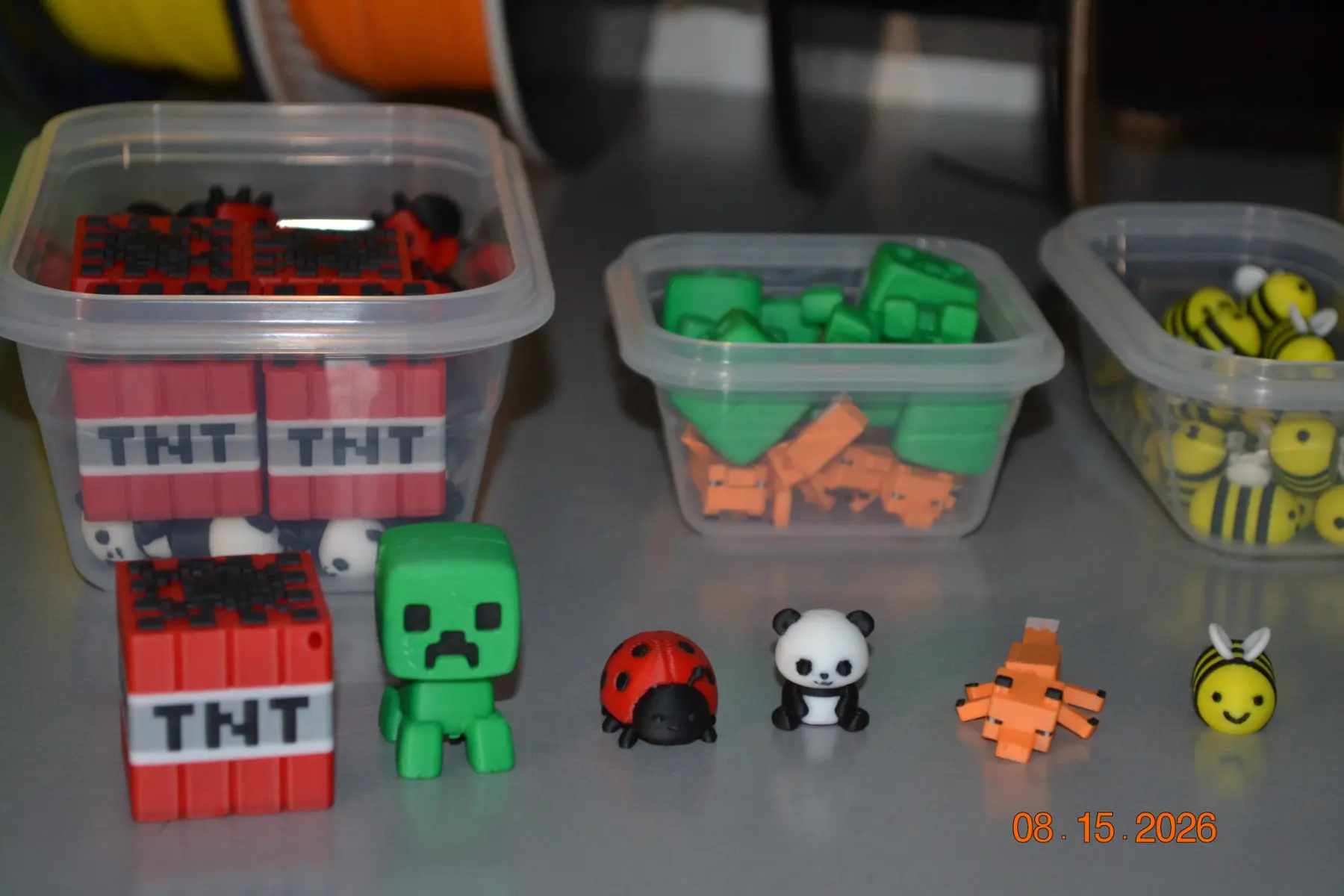
3D-printed TNT block, creeper, ladybug, panda, fox, and bee with filament spools
Character production study · August 2026
P2SPrimary FDM platform
AMSMulticolor workflow
0.4Millimeter nozzle
CAD→PARTDesign through inspection
New work

Small parts expose big process problems.

These character prints look simple, but they test first-layer adhesion, color changes, seam placement, small features, and repeatability across a batch.

Organized batches of multicolor 3D-printed miniatures
Batch inventory · finished characters and production bins
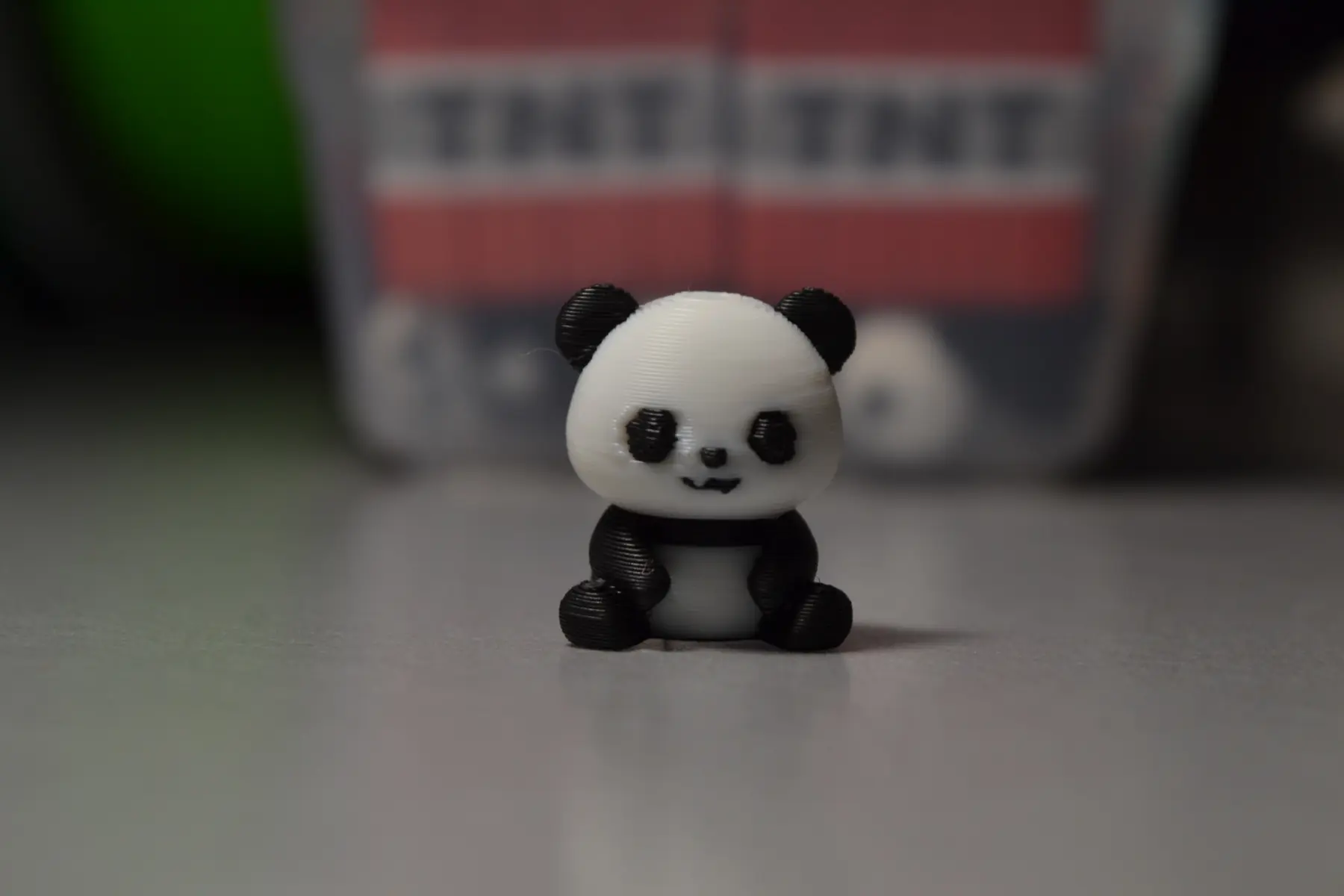
Black-and-white 3D-printed panda miniature
Two-color panda · surface and seam study
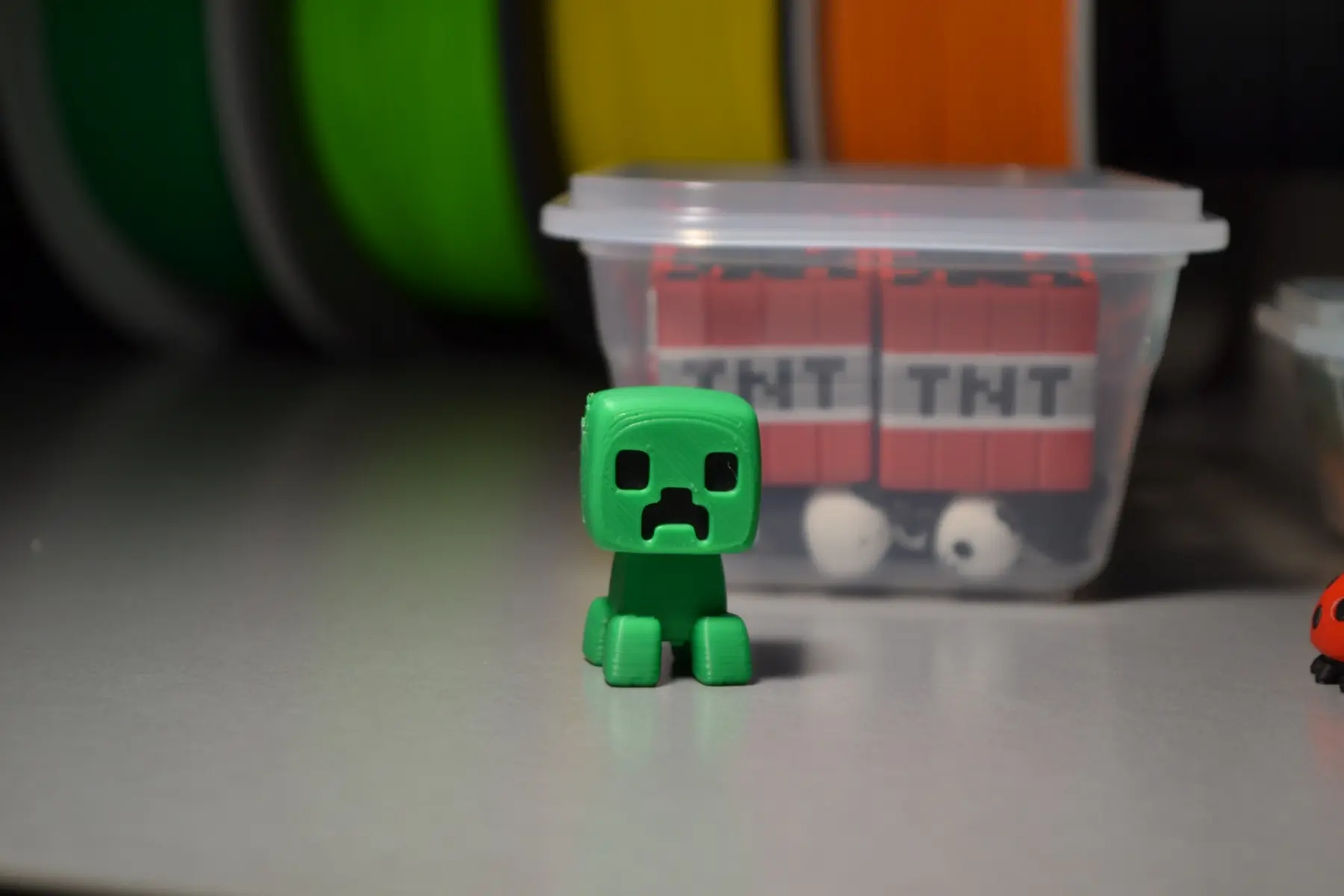
Green and black 3D-printed creeper miniature
Small-feature reliability · creeper
CAD + fabrication setup

From digital geometry to a controlled build.

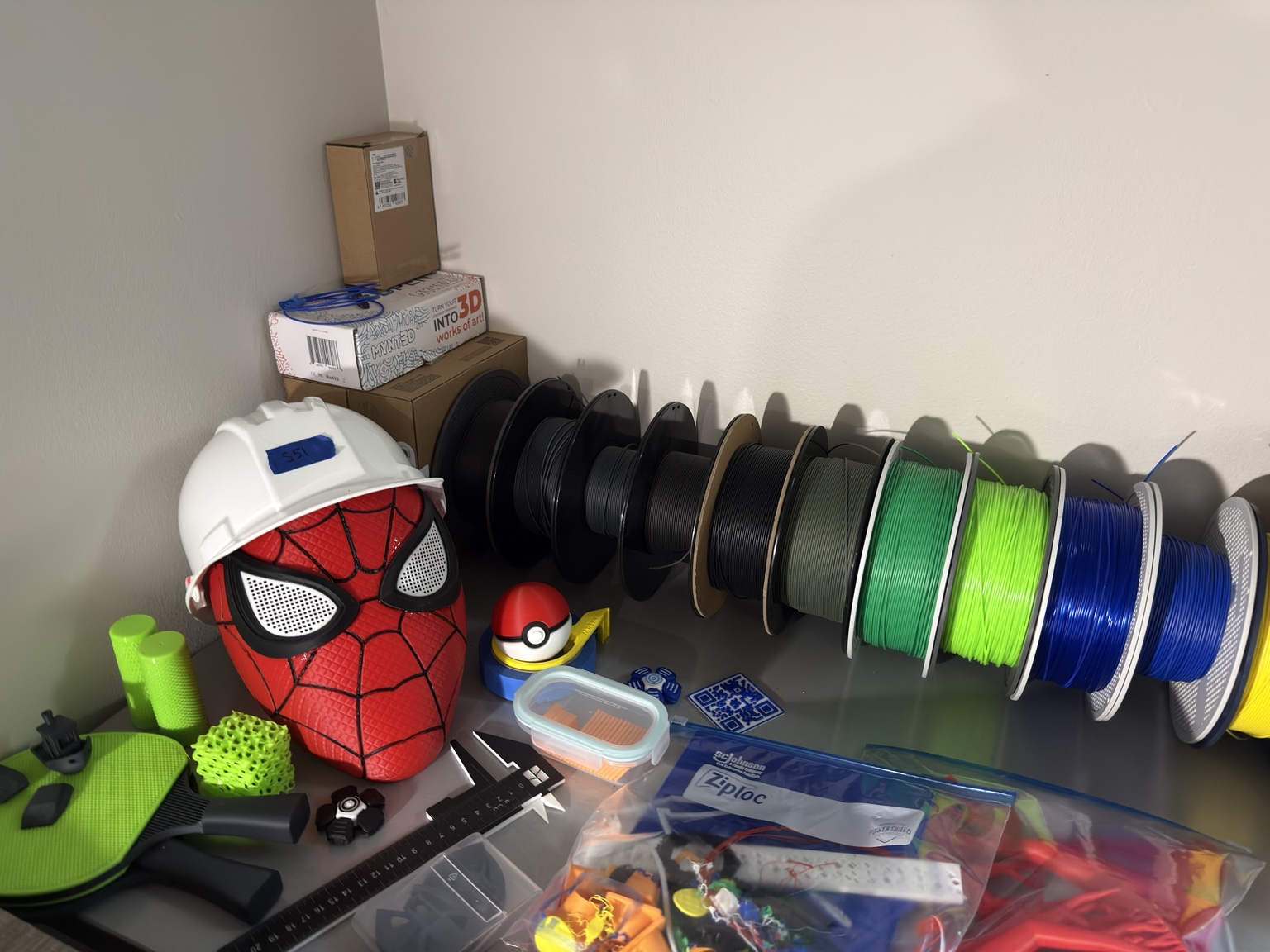
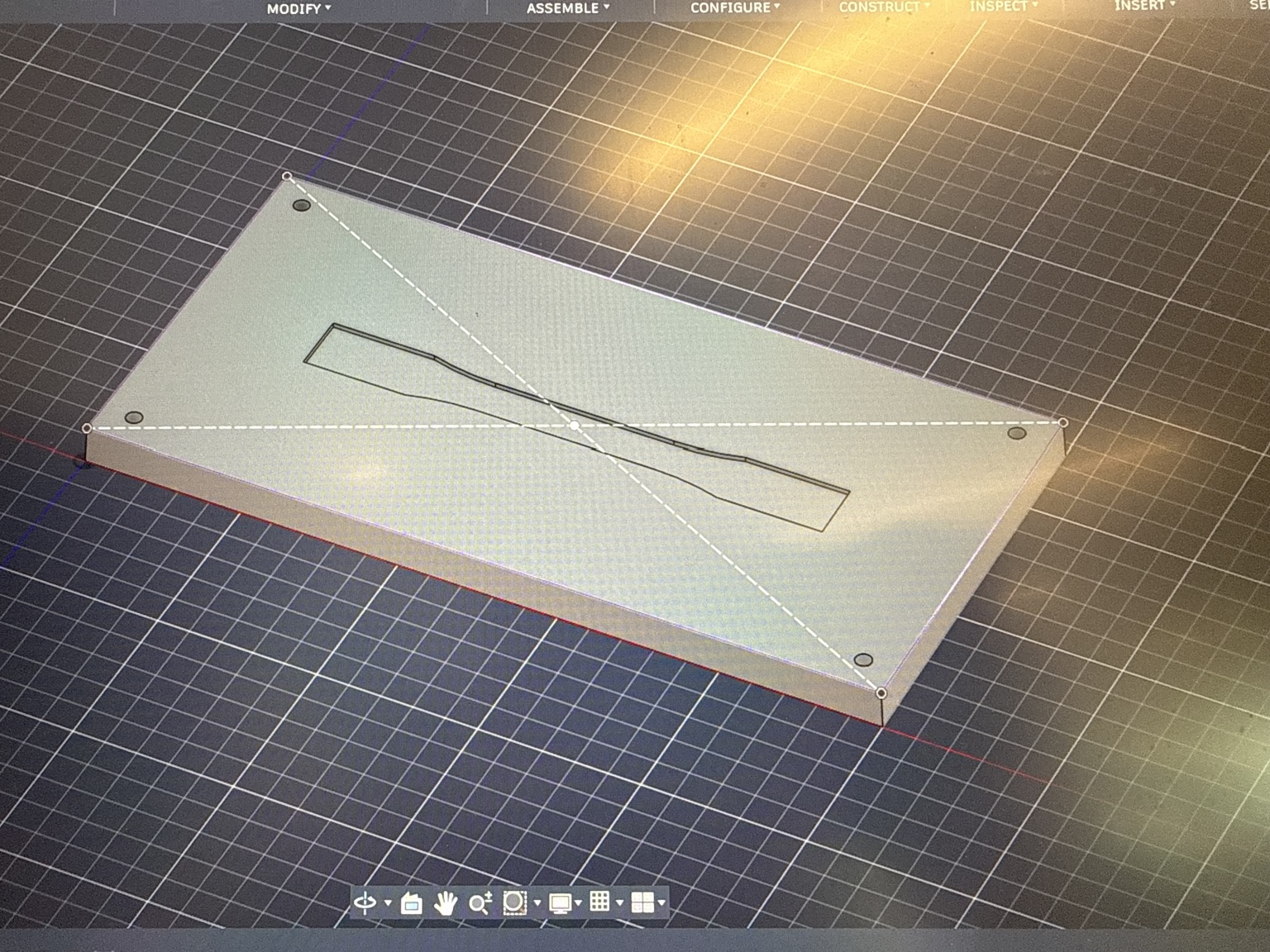
My workflow connects fixture design in Fusion 360 with an organized material and measurement setup for prototyping, inspection, and iteration.

3D-printing workbench with filament inventory, measuring tools, printed parts, and a Spider-Man hard-hat prototype
Prototype workbench · materials, measurement tools, and finished parts
Fusion 360 CAD model of a rectangular fixture plate with mounting holes and a central specimen-shaped cutout
Fusion 360 fixture design · mounting layout and specimen geometry
Project series

Three ways I use additive manufacturing.

Each project pushes a different part of the process: multicolor detail, functional geometry, or repeatable production.

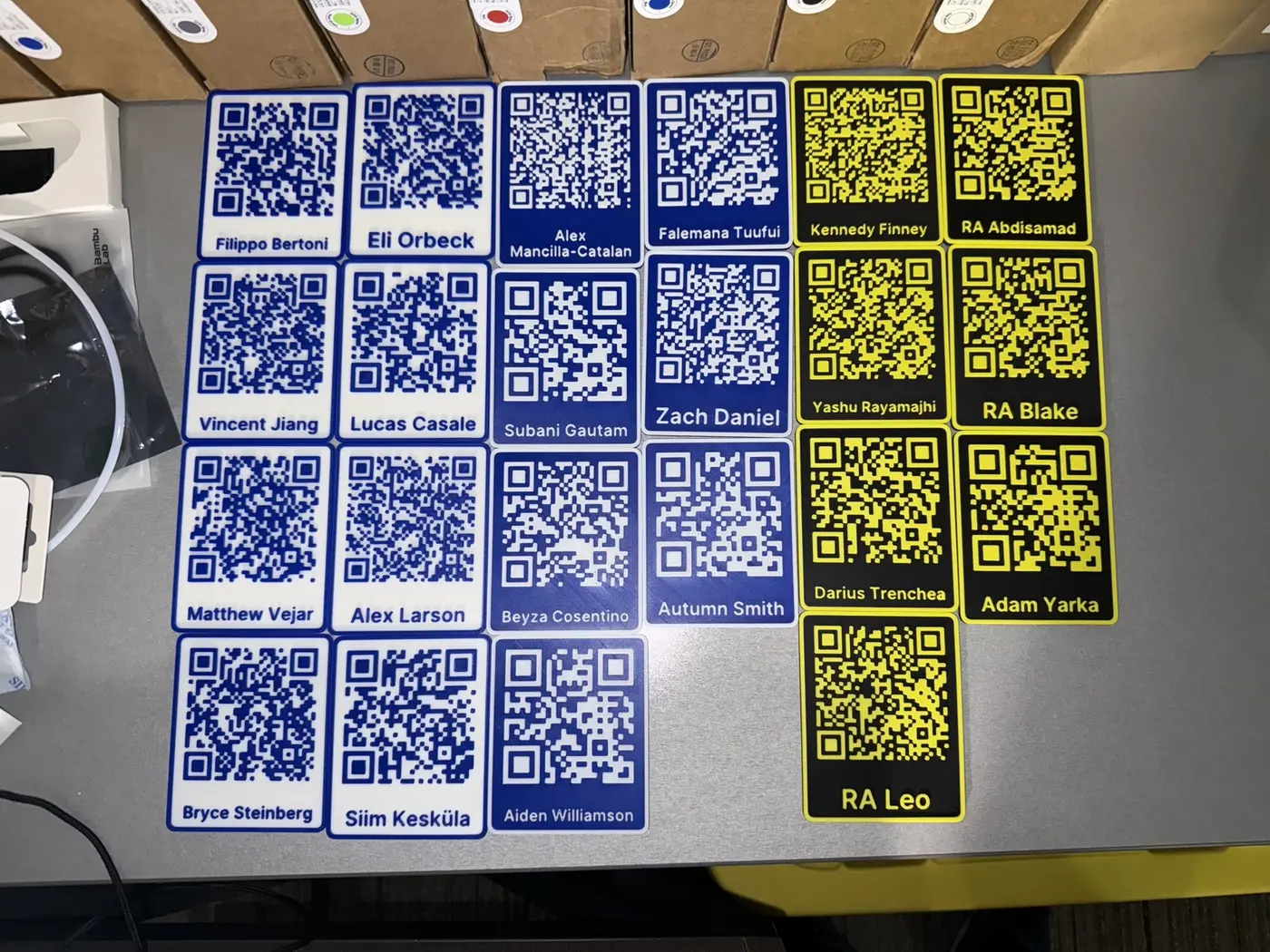
Finished multicolor QR-code panels in several color combinations
Series A · Multicolor communication

QR Panels + Personalized Parts

I produced high-contrast QR panels with personalized center marks, managed hundreds of small geometric features, tested scan reliability, and arranged the parts for repeat batch printing.
QR geometryAMSBatch layoutScan testing
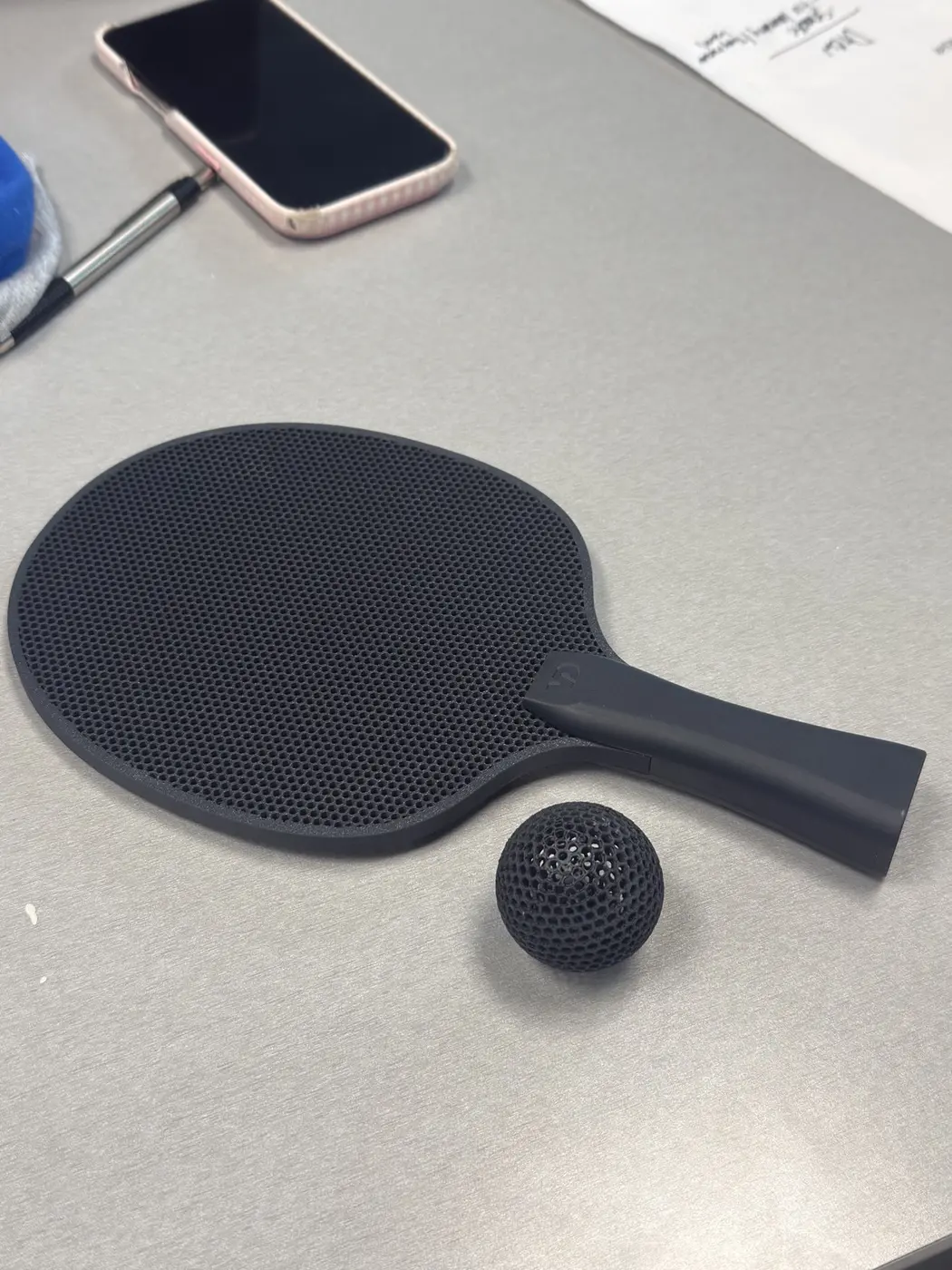
3D-printed paddle and ball with a lightweight lattice pattern
Series B · Functional geometry

Lattice Paddle Study

I used a lightweight paddle-and-ball build to compare stiffness, mass, print time, surface finish, and how the visible internal structure handled use.

LatticeFunctional printInfill strategyIteration
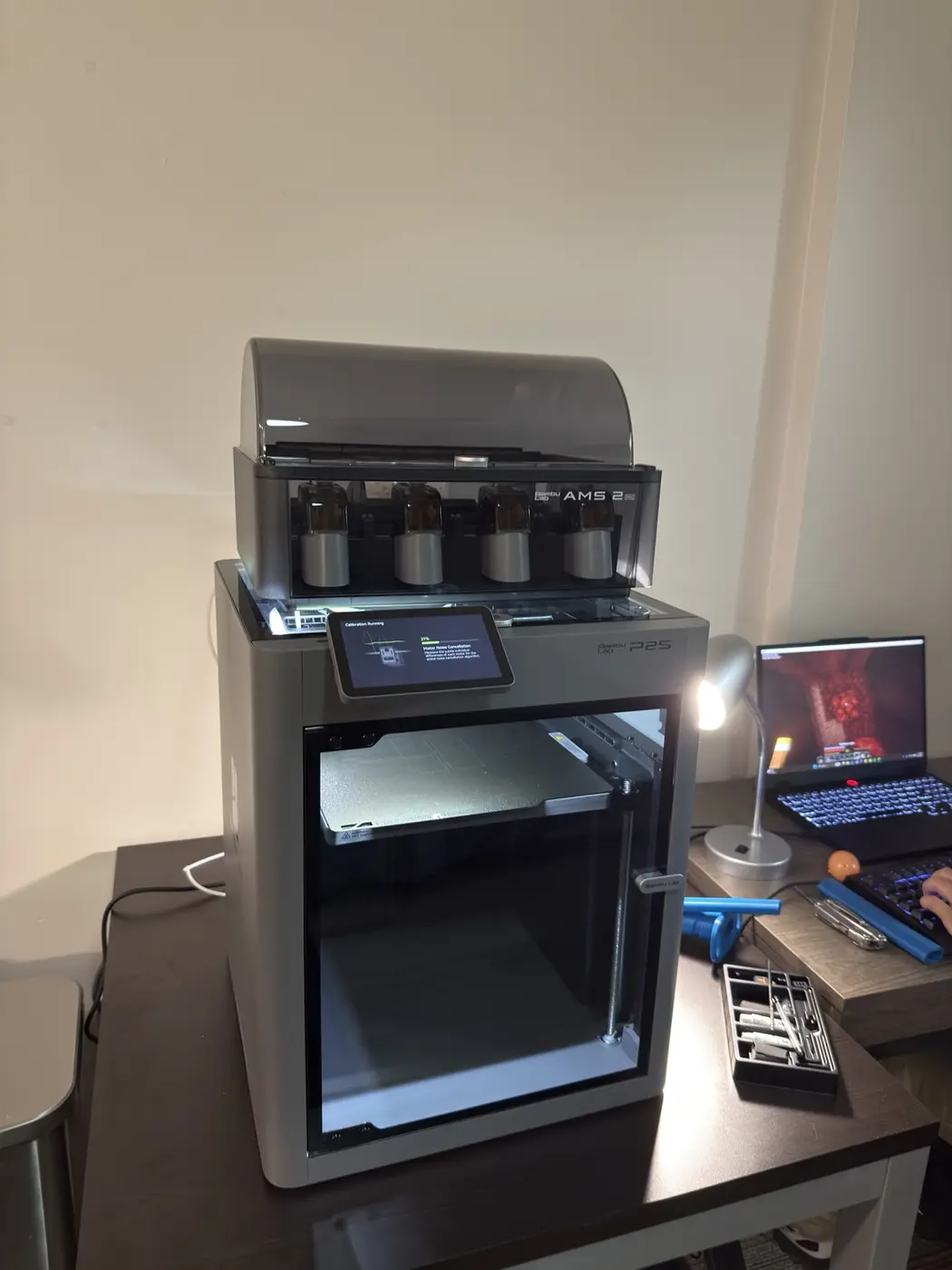
Bambu Lab P2S printer with an AMS multicolor material system
Series C · Production system

Multicolor FDM Workcell

I moved from one-off prints to a more organized setup with dry filament storage, repeatable build plates, planned color assignments, purge control, first-layer checks, and finished-part inventory.

Bambu P2SAMSPLAProcess control
Working method

I treat each print like a small test.

Finishing the print is not enough. I want to know why it worked, what failed, and what I should change before running the next plate.

01

Define

Start with function, audience, scale, color count, and the failure modes that matter.

02

Model

Build or adapt geometry in Fusion 360, CAD, or a parametric workflow with assembly and print orientation in mind.

03

Prepare

Choose layer height, walls, infill, support strategy, color order, and a repeatable plate layout.

04

Print

Run multicolor FDM on the Bambu P2S + AMS and watch first-layer quality, purge behavior, and small-feature reliability.

05

Inspect

Check fit, surface quality, function, scanability, and whether the part communicates the intended idea.

06

Iterate

Change the geometry or process—not just the cosmetic settings—and document what improved.

What this portfolio demonstrates

What I check on every build.

Design: geometry, tolerances, orientation, color separation, and post-print assembly.

Production: plate utilization, part repeatability, inventory, material choice, and failure recovery.

Quality: first-layer adhesion, visible finish, fit, function, and scannability where applicable.

Communication: photography, documentation, naming, and turning prototypes into a coherent product story.

Next project

See how I applied the same organization to Geebland Market.

Open Geebland Market →
Full-time engineering opportunities

I bring this same process discipline to engineering work.

I graduate in December 2026 and am seeking a full-time, permanent role in mechanical design, test and integration, manufacturing, product development, or R&D. I am open to relocation.

Lexington, KentuckyAvailable after December 2026 graduation